Network Traffic Analysis — Wireshark / PCAP
Overview
Analyzed BACnet and Modbus/TCP network traffic using Wireshark to characterize OT protocol behavior and establish communication baselines. Applied protocol-specific display filters, decoded NPDU and APDU packet structures, and correlated Modbus request-response sequences across captured traffic. Findings confirm that both protocols transmit device commands and operational data in cleartext with no authentication — creating a high-value target for passive monitoring and anomaly detection.
Objective
Perform passive PCAP analysis of OT network traffic to characterize protocol behavior, document device communication patterns, and produce findings applicable to detection rule development and network baselining.
Tools Used
- Wireshark
- PCAP files (BACnet, Modbus/TCP)
What I Did
- Opened OT protocol PCAP files and applied Wireshark display filters to isolate BACnet and Modbus/TCP traffic
- Identified BACnet Who-Is broadcast traffic used for device discovery across the network segment
- Captured I-Am response messages confirming active device enumeration
- Expanded NPDU and APDU fields to inspect BACnet packet structure and message content at each protocol layer
- Filtered Modbus/TCP traffic on port 502 and identified function codes across request and response frames
- Correlated Modbus request-response pairs to validate which commands were accepted and executed
- Documented all findings with annotated screenshots for use in baselining and detection rule development
Evidence / Findings
BACnet display filter applied
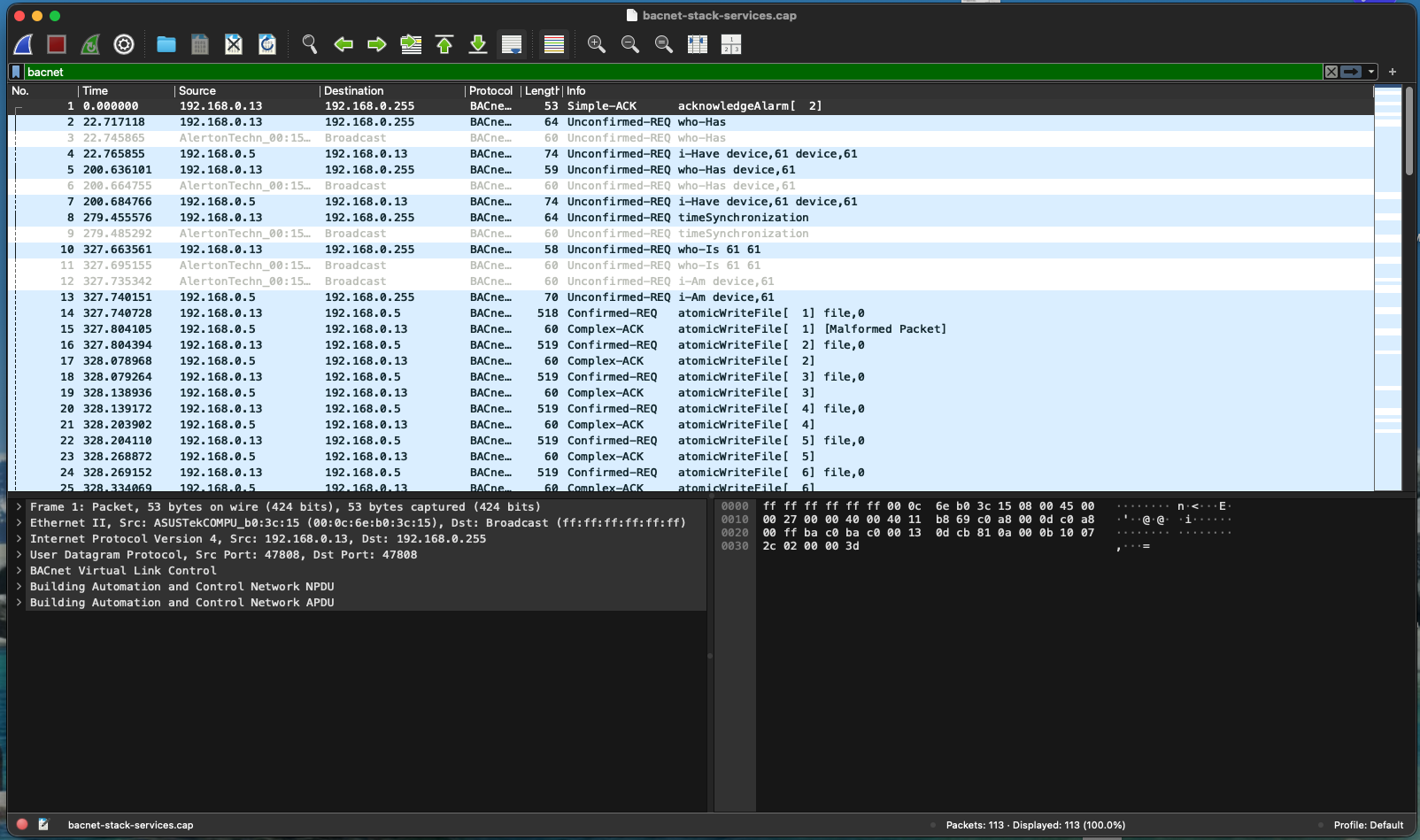 Wireshark filter
 bacnet isolates BACnet protocol traffic — Who-Is broadcasts visible as broadcast destination frames, confirming device discovery behavior.
NPDU and APDU layers expanded
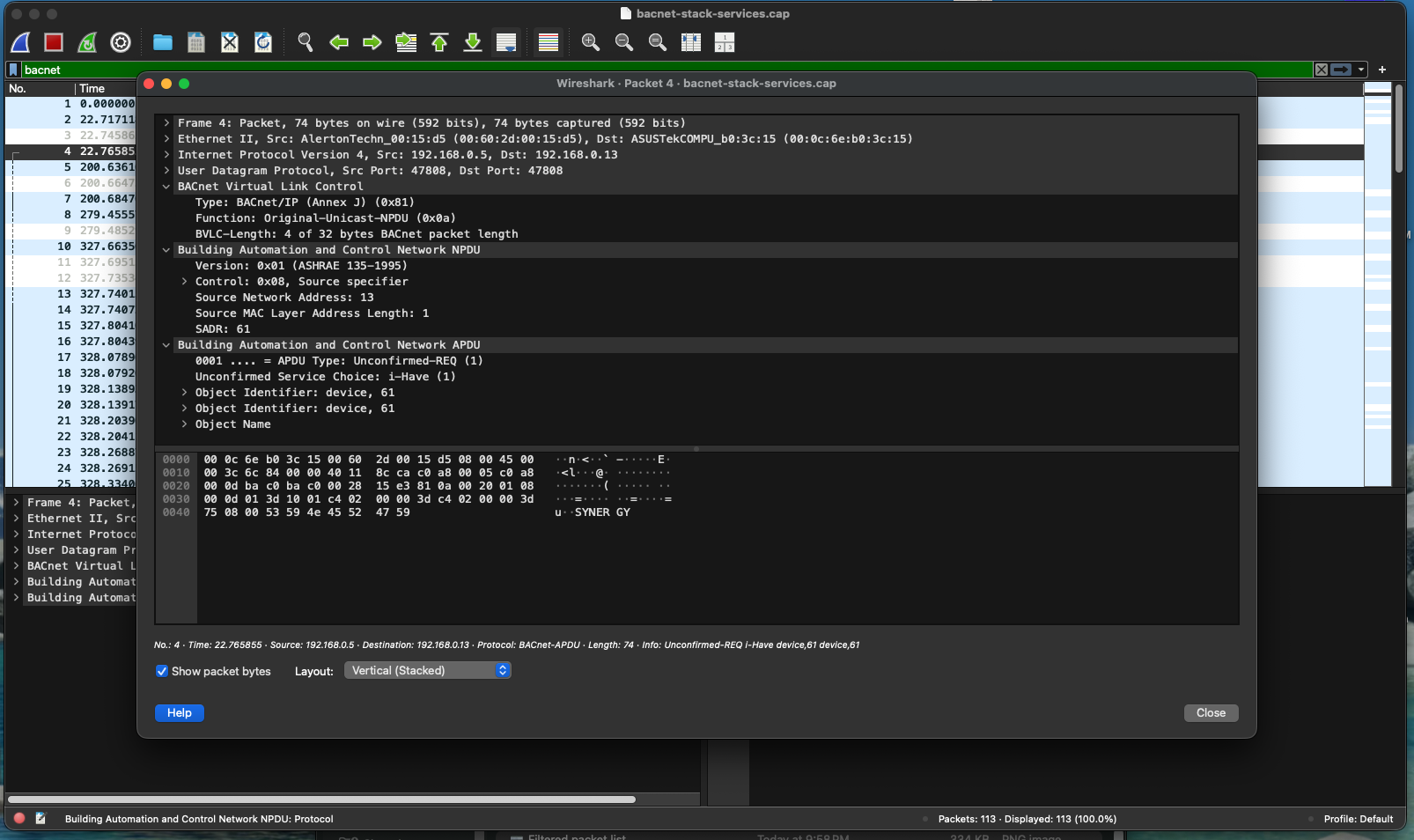 BACnet packet structure expanded to show NPDU (network layer) and APDU (application layer) fields — message type, device addressing, and service parameters visible in cleartext.
BACnet frame breakdown
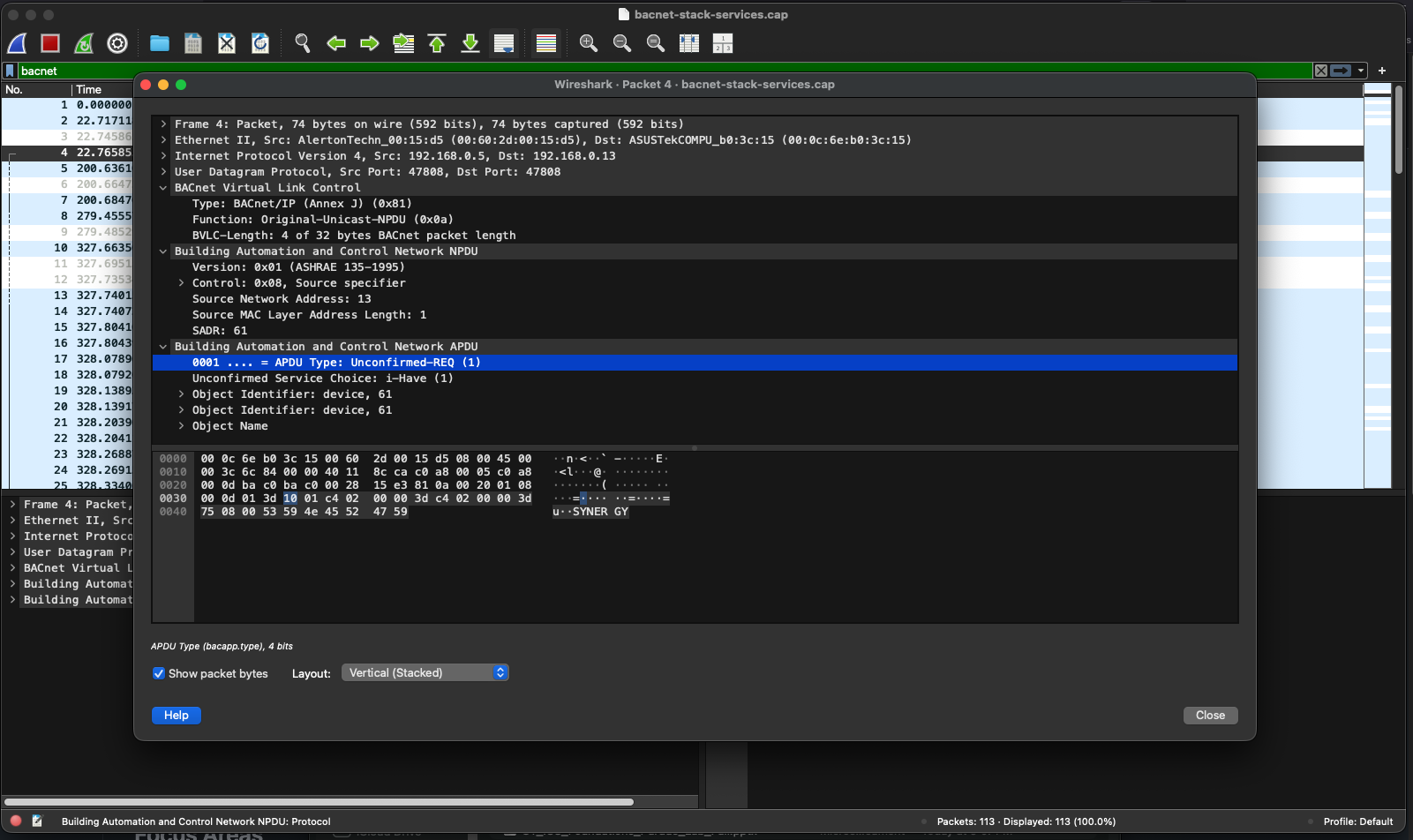 Layer-by-layer breakdown of a BACnet frame confirming no encryption or authentication fields present at any layer.
Modbus/TCP display filter applied
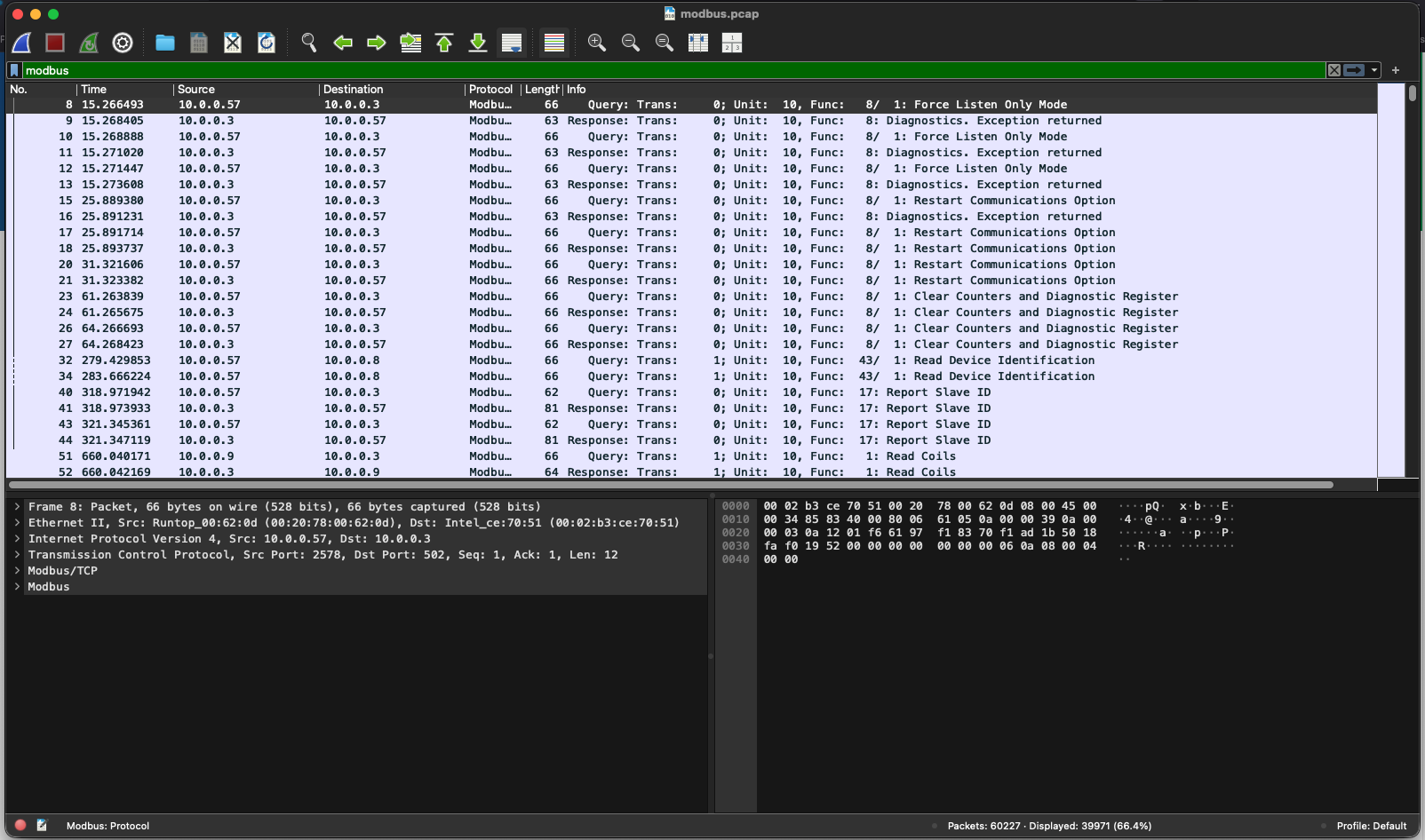 Wireshark filter isolates Modbus traffic on TCP port 502 — request and response frames separated and visible for correlation.
Modbus protocol expanded
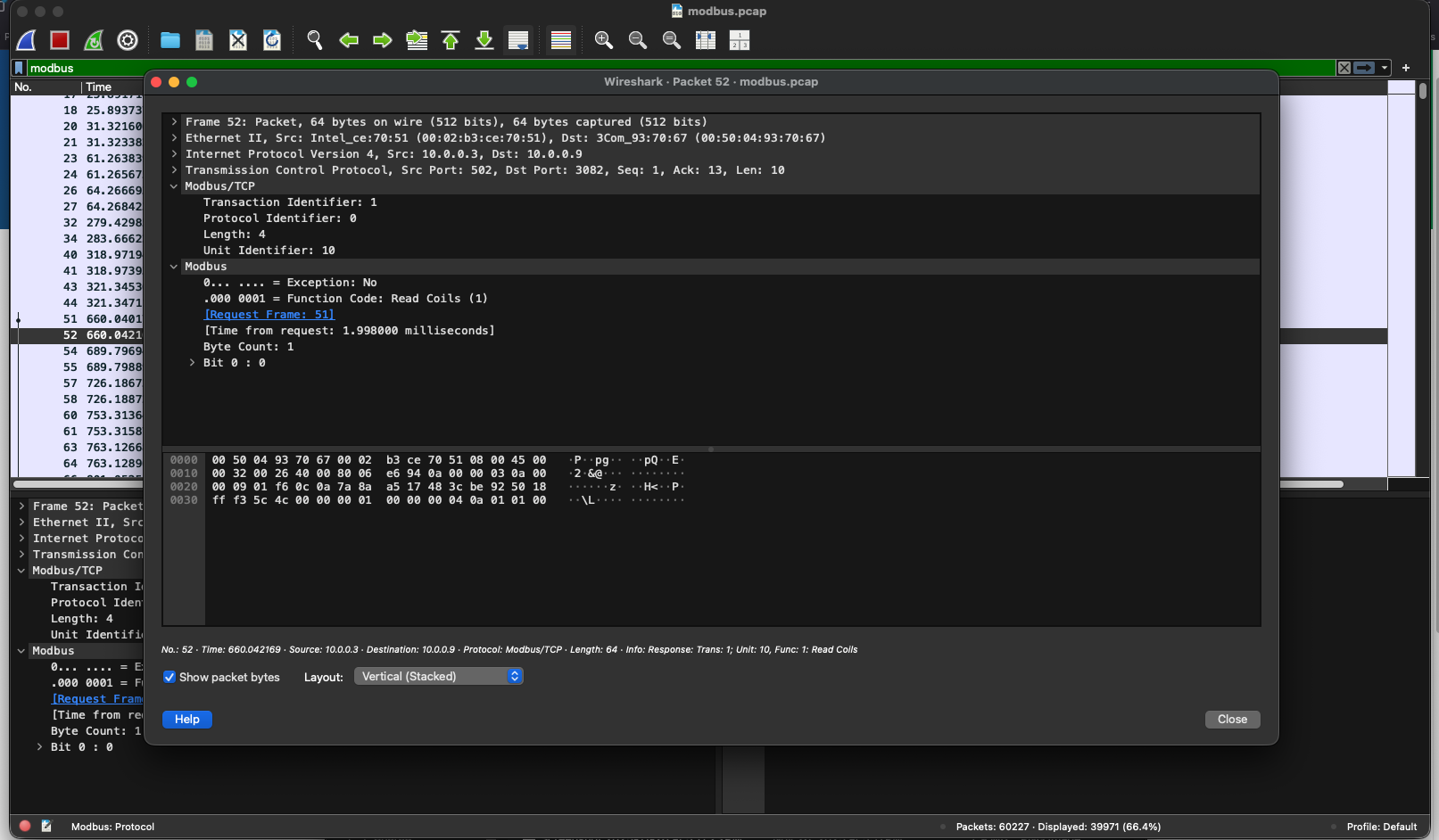 Modbus frame expanded showing function code, register address, and data values — all transmitted in cleartext with no authentication header.
Request-response correlation
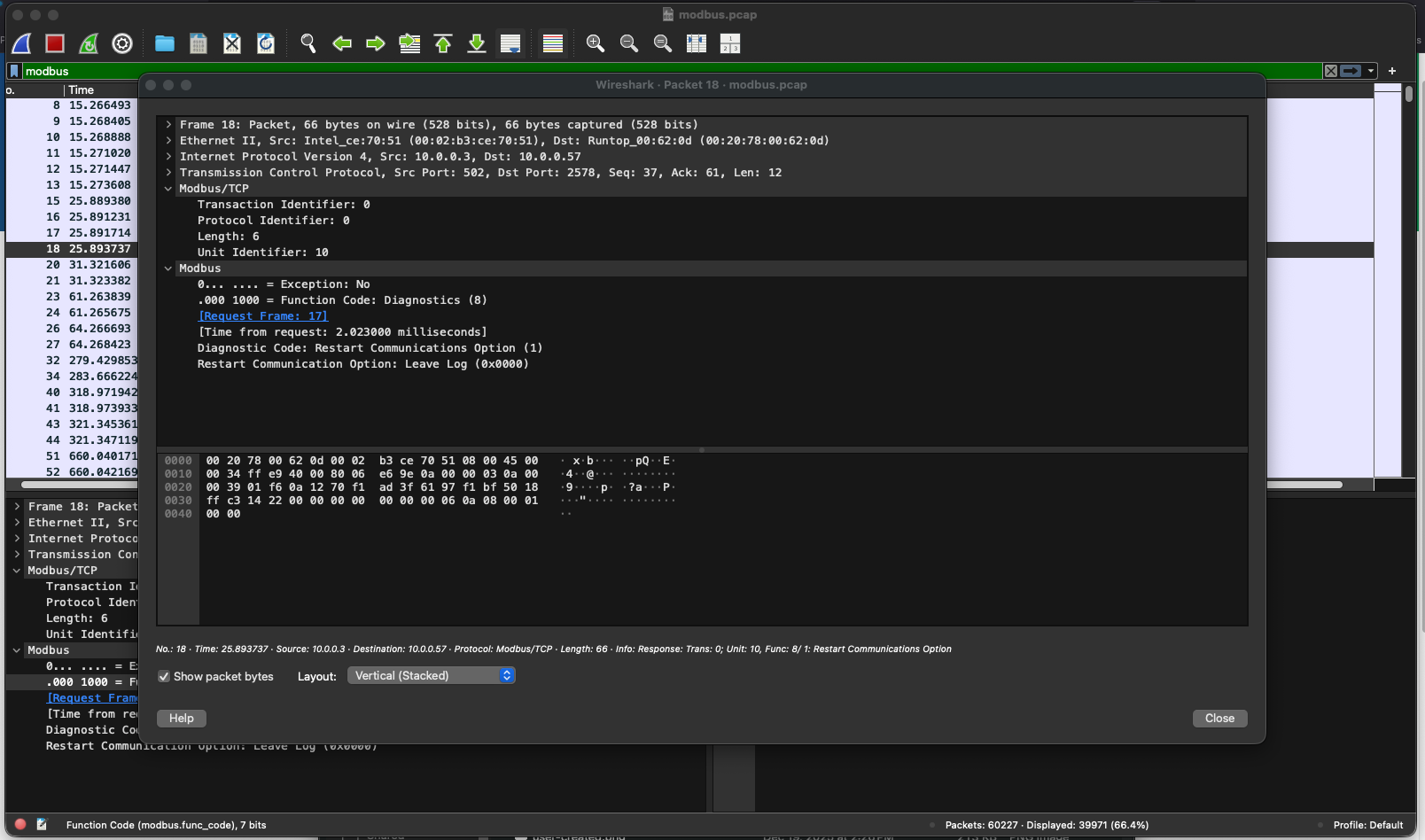 Modbus request and corresponding response correlated — confirms command was accepted and executed by the target device with no authentication challenge.
Outcome / Recommendations
Both BACnet and Modbus/TCP operate without encryption or authentication. A passive network tap on either protocol segment provides complete visibility into device inventory, communication patterns, and command execution — with no credentials required. This creates both a detection opportunity and a significant risk exposure:
- Deploy passive OT network sensors to capture and baseline BACnet and Modbus traffic — any deviation from the established baseline is an actionable alert
- Implement detection rules for write-class Modbus function codes (FC 5, 6, 15, 16) from unapproved source IPs
- Alert on BACnet Who-Is broadcast volume exceeding normal polling intervals
- Restrict Modbus write access to approved engineering workstation IPs at the network layer