Linux System Baseline — OT Environment
Overview
Established a secure operational baseline for a Linux system in an OT-adjacent environment using passive, non-intrusive inspection methods. Verified system identity, enumerated all running services and listening network ports, and mapped active network interfaces — producing a documented reference state for change detection. All inspection methods were selected to avoid disrupting system availability or triggering service interruptions in the operational environment.
Objective
Conduct a passive baseline audit of an OT-adjacent Linux system to establish a documented reference state for services, network exposure, and system health — without impacting availability or triggering process disruption.
Environment
- Platform: Ubuntu Linux (ARM64) — UTM/QEMU
- Hostname:
ot-lab - Role: OT-adjacent Linux system under availability-first security constraints
Tools Used
- bash / terminal
hostnamectl,uname— system identityhtop— resource utilization monitoringsystemctl— service enumerationss— passive socket and port inspectionip/ network interface commands
What I Did
- Verified hostname and confirmed system identity as
ot-labto anchor all documentation - Captured OS version and kernel information to establish the baseline software state
- Monitored CPU and memory utilization with
htopto document normal resource consumption at rest - Enumerated all active services via
systemctland identified the expected service footprint - Listed all listening network ports using passive socket inspection — no active scanning performed
- Reviewed active network interfaces to map system connectivity and identify connected network segments
- Captured screenshots of each inspection step to produce a reproducible baseline record
Evidence / Findings
System identity confirmed
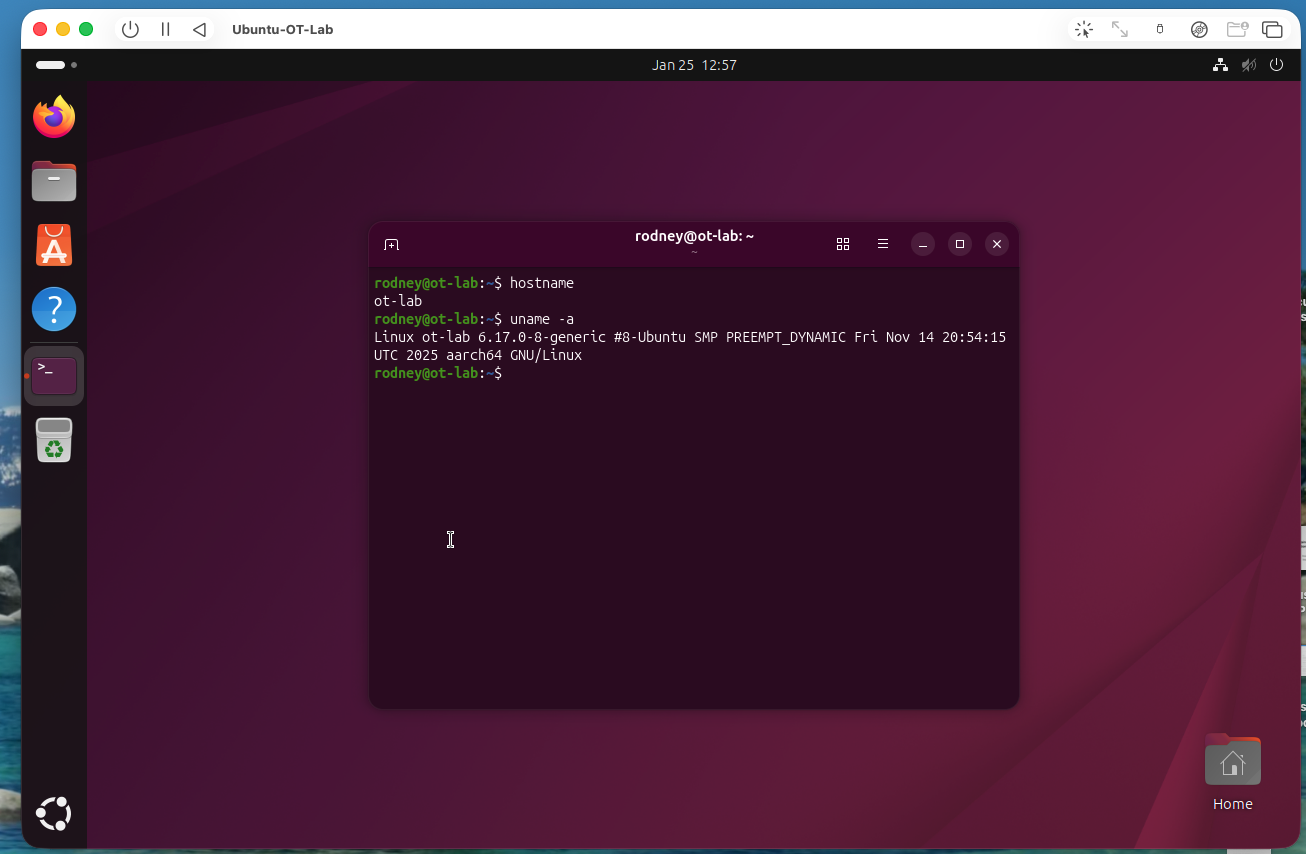 Hostname verified as
 ot-lab. OS version and kernel captured — establishes documentation anchor for all baseline records.
Resource utilization baseline
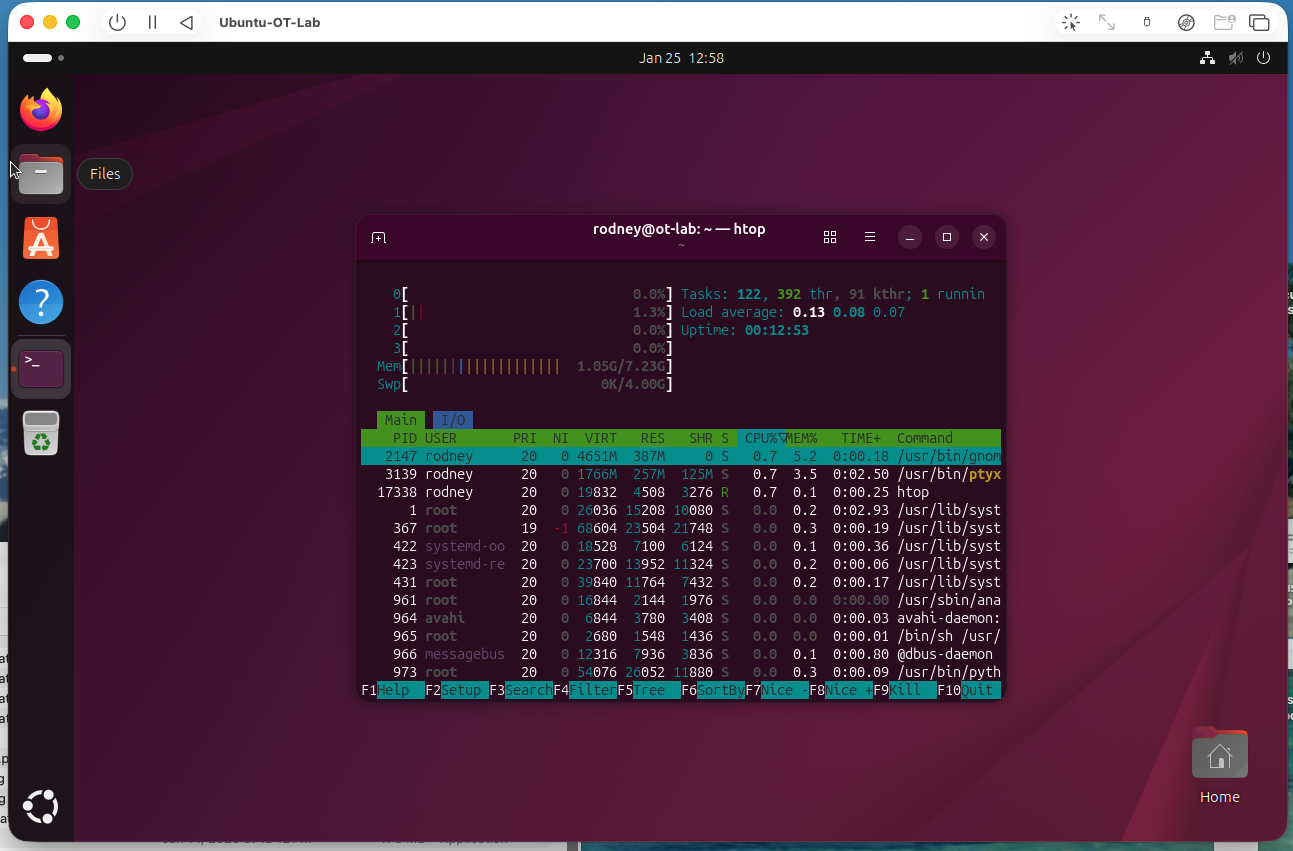 CPU and memory utilization captured at rest via
 htop. Establishes normal resource consumption — deviations from this baseline may indicate unauthorized processes.
Active services enumerated
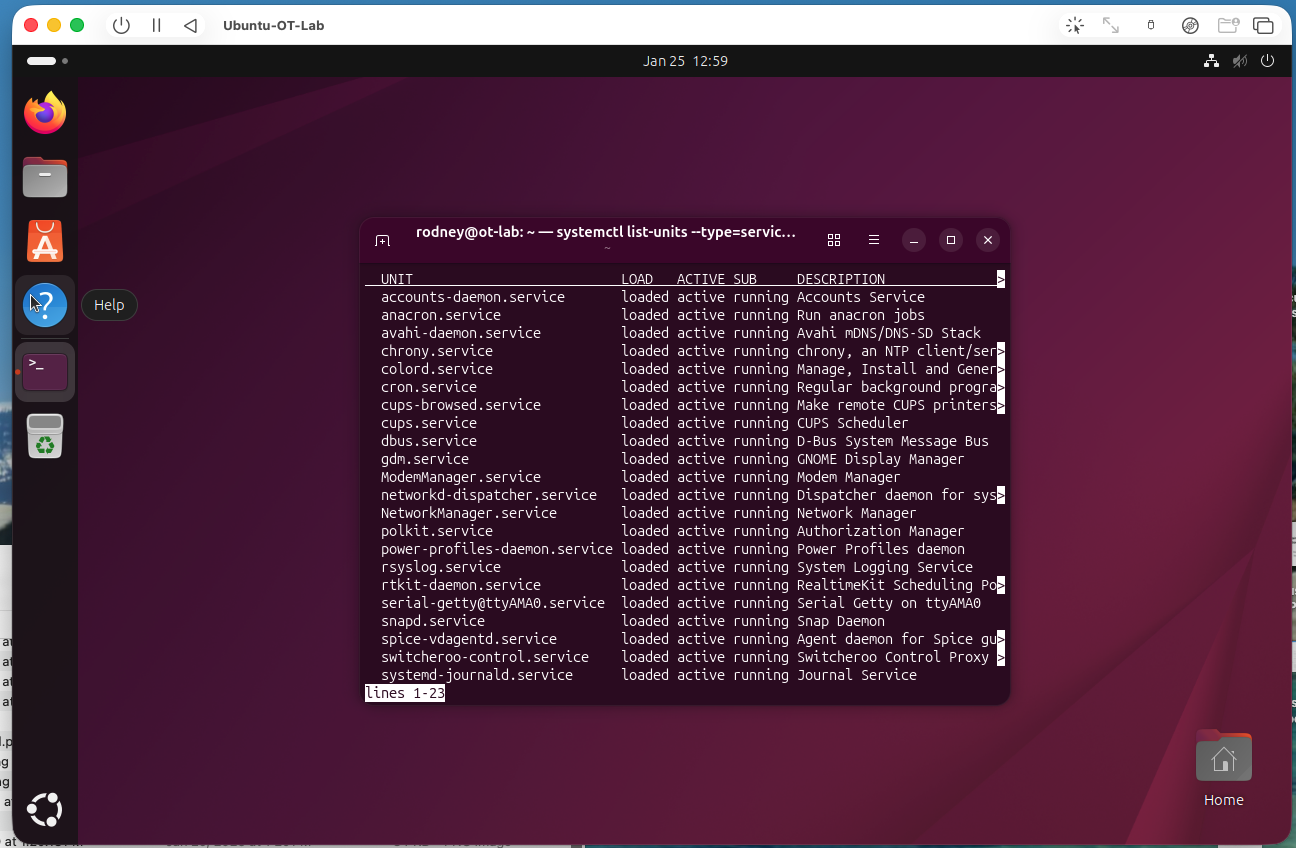 Full service list captured via
 systemctl — documents the expected service footprint. Any new entries on a future baseline comparison represent an unauthorized service addition.
Listening ports documented
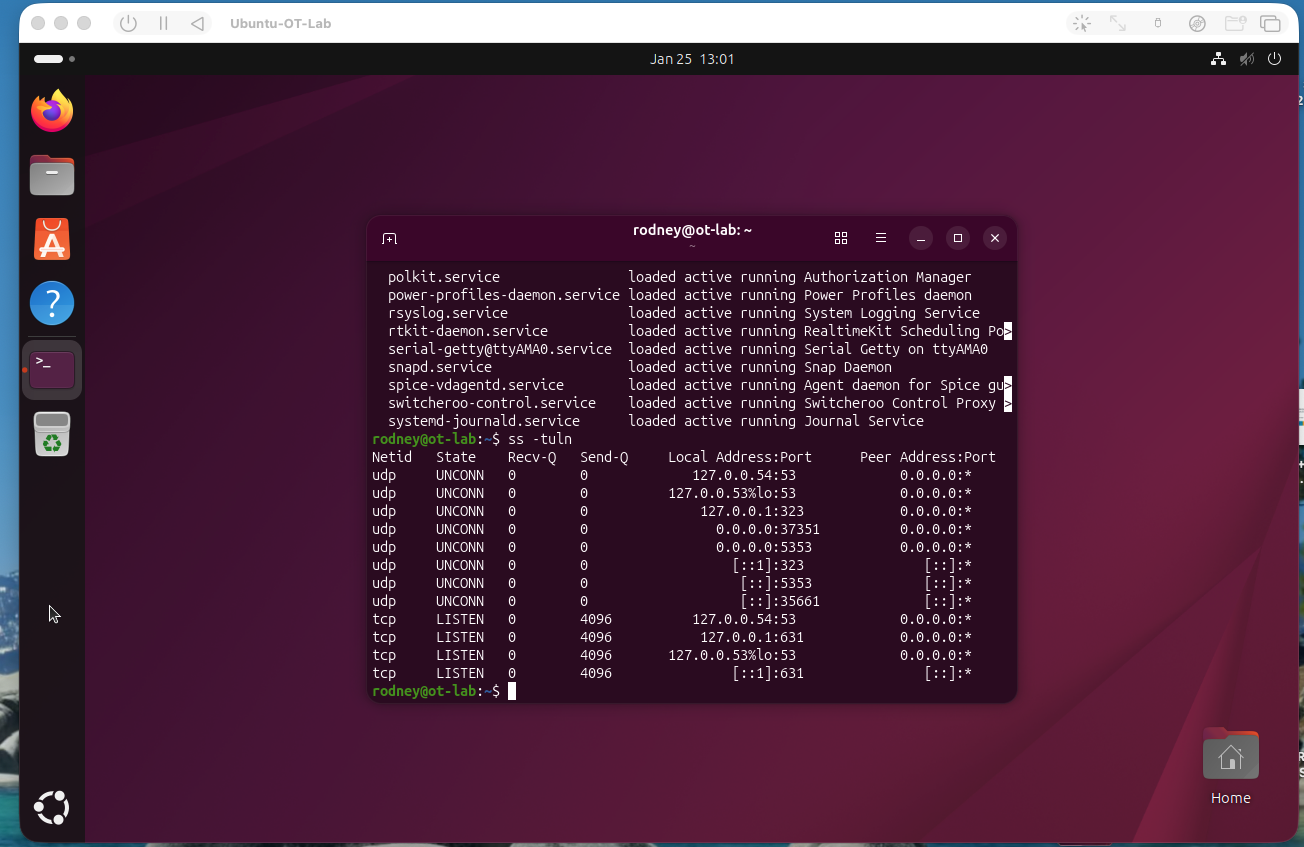 All listening ports identified via passive socket inspection. Documents the system’s current network exposure — unexpected open ports on future review indicate configuration drift or unauthorized software.
Terminal context
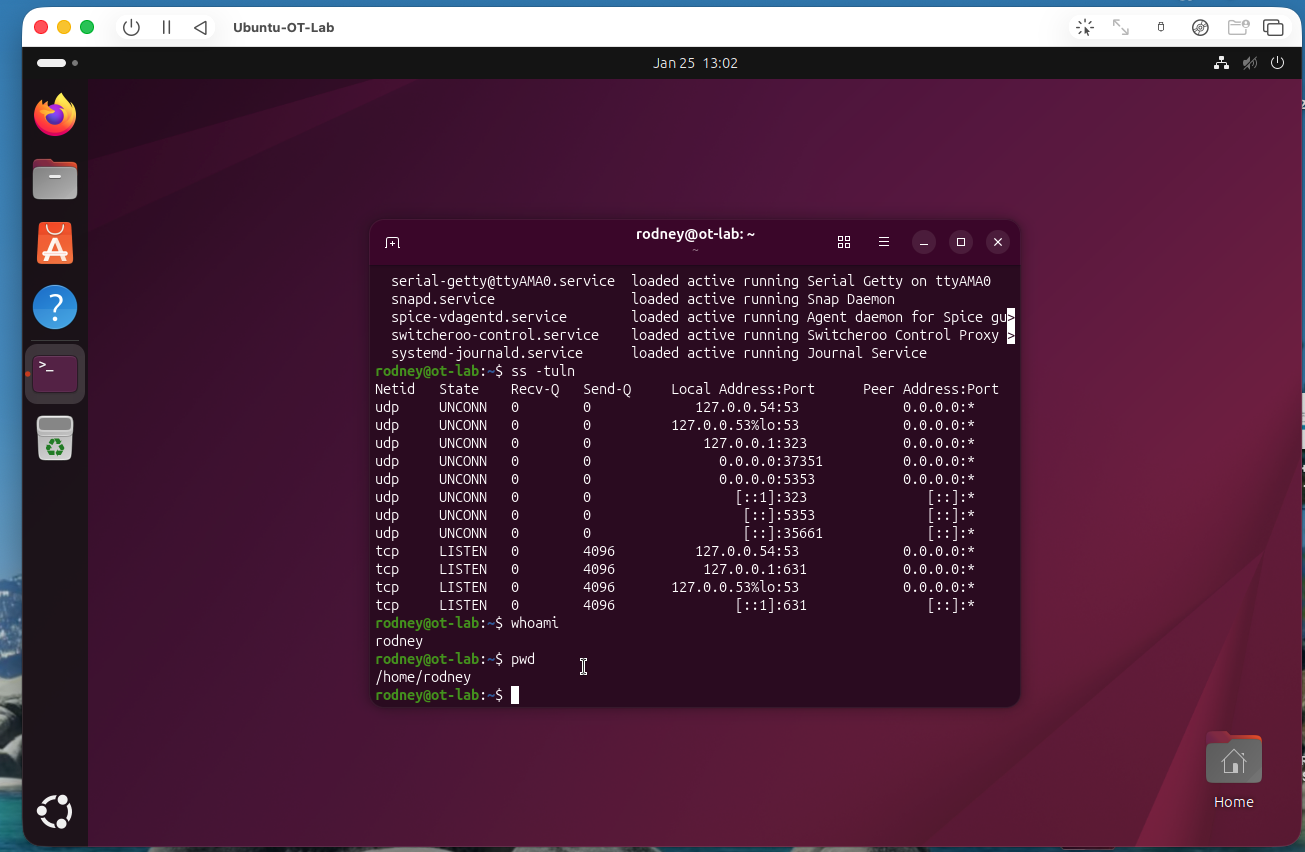 Terminal session context confirming execution environment and analyst access level.
Network interfaces mapped
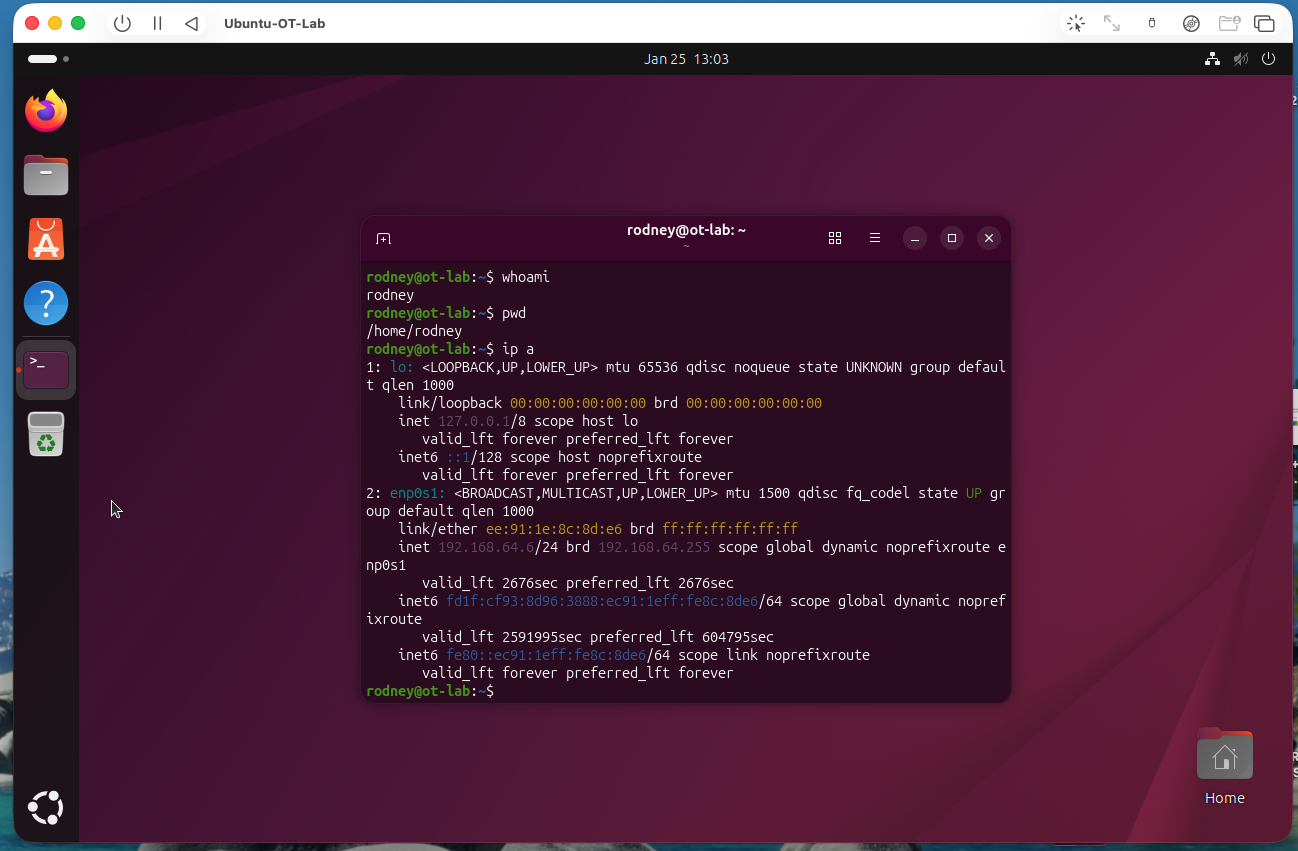 Active network interfaces listed with IP addressing — documents which segments the system is connected to and confirms the network topology assumed in the baseline.
Outcome / Recommendations
Baseline established for the ot-lab system. The documented service list, port exposure profile, and resource utilization provide the reference state needed to detect unauthorized changes, new services, or unexpected network connections on future audits.
- Store baseline snapshots in a version-controlled security runbook and re-run on a defined cadence
- Diff service lists and listening port output against the baseline after any maintenance window
- Flag any new services, open ports, or interface changes as change control items requiring review
- Integrate baseline outputs into SIEM as reference data for endpoint behavioral baselining